SOVA-S
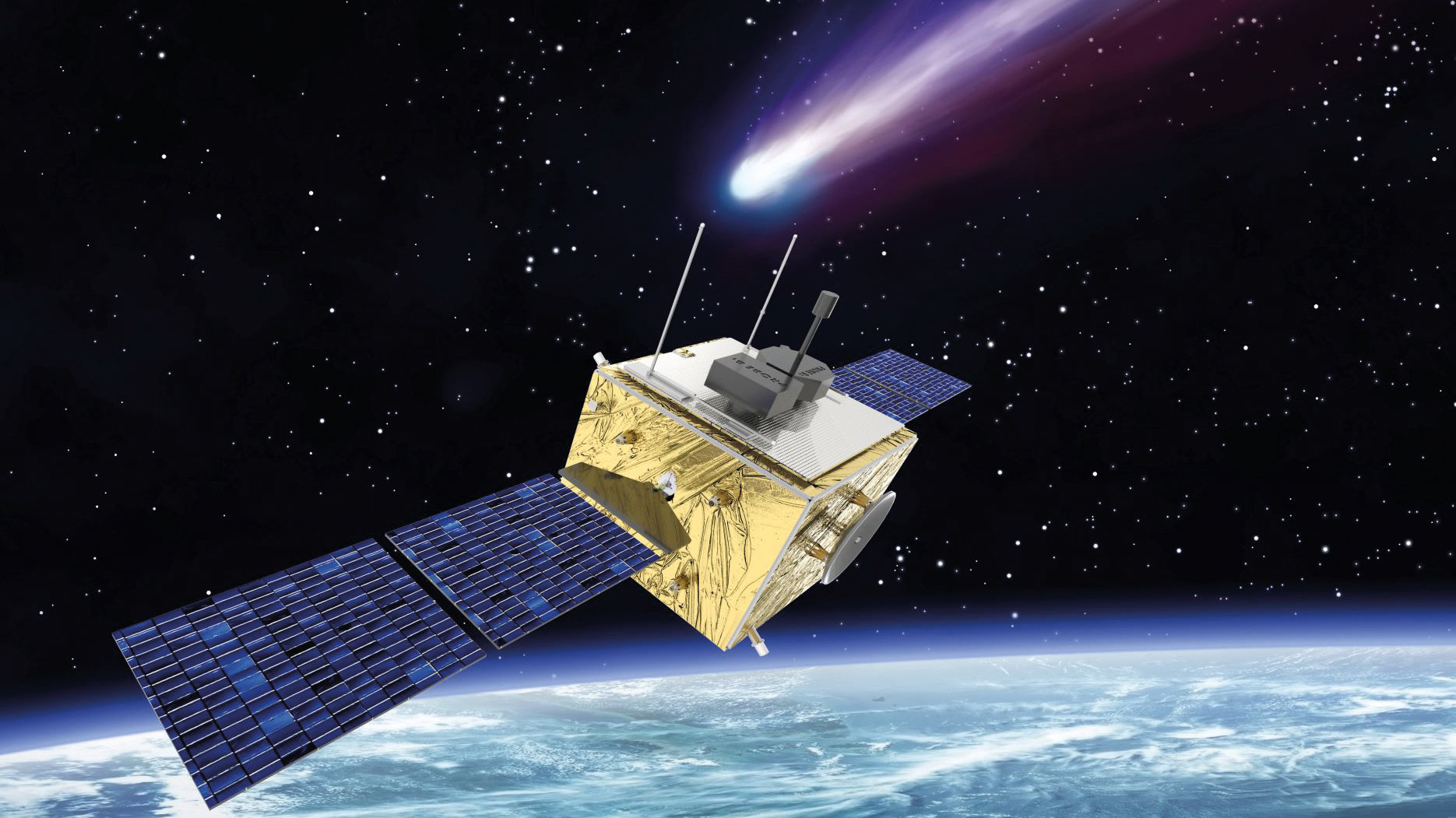
The SOVA-S (Satellite Observation of waVes in the Atmosphere - Scout) scientific mission is a successful answer to the ESA Second Scout Cycle Earth Observation missions. The main goals are focused on atmospheric research and the associated climate research, with the aim of improving climate models and potentially advancing extreme weather forecast models.
New mission concept
Our SOVA-Scout Mission is complementary to the potential Earth Explorer 12 Candidate mission Keystone and is characterised by agile and low-cost development process to prove a new concept for future ESA endeavours.
SOVA-S is the first ESA Scout mission with a consortium led by a Czech company that has been selected as one of the top 4 international projects submitted for the initiative and has thus progressed to the consolidation phase.
Scientific background
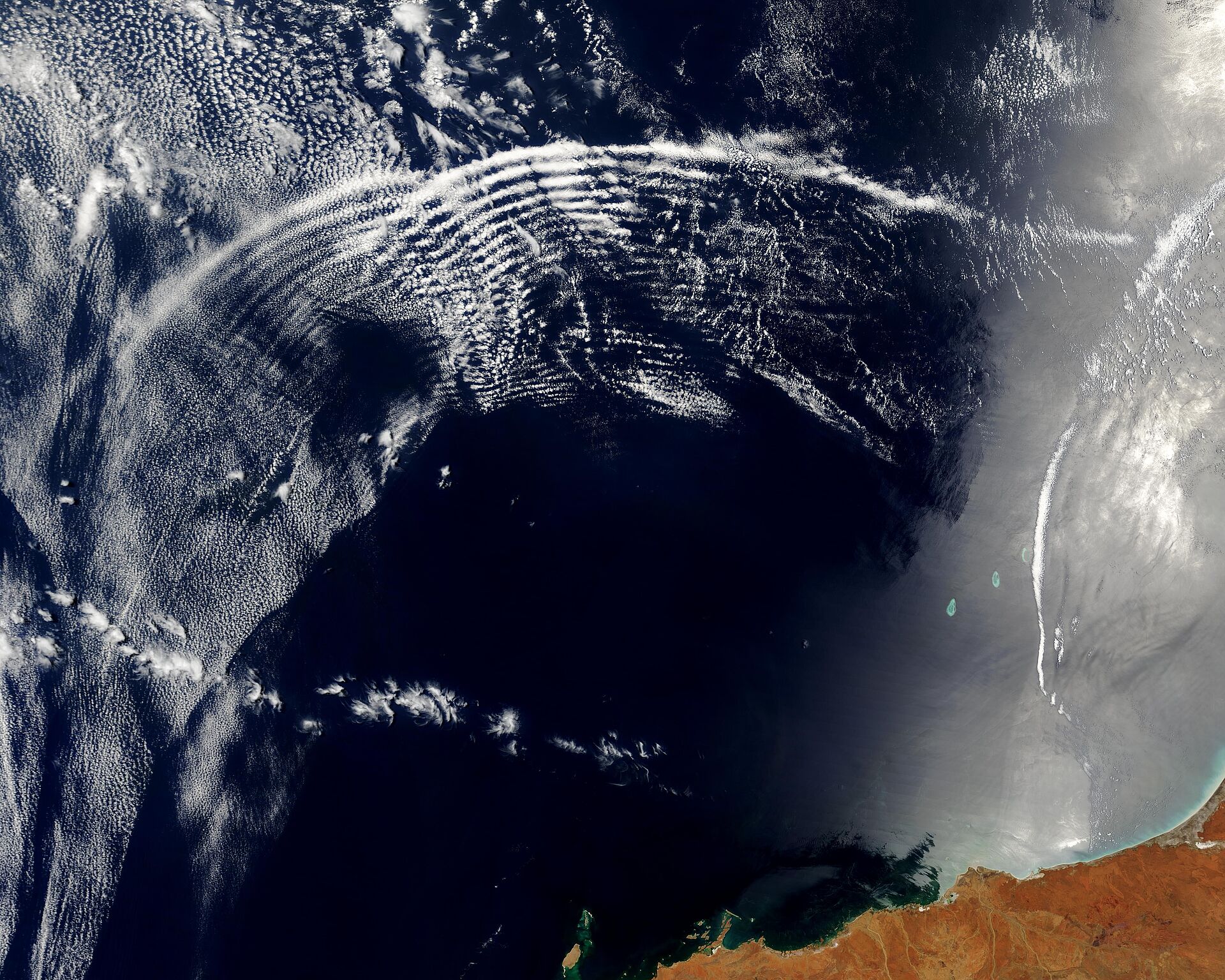
The global climate is influenced by so-called atmospheric gravity waves and current climate models do not accurately take this phenomenon into account. These (air) waves transport an immense amount of energy from the lower atmosphere to the upper atmosphere where they break up and travel great distances, just like ocean waves, but on a larger scale.
Primary objective
SOVA-S aims to obtain near global and daily coverage of the small-scale atmospheric gravity wave parameters in the upper mesosphere and lower thermosphere (~80–120 km). Gravity waves propagate within these altitude regions, influencing atmospheric dynamics. The data will help better parametrize these effects in our climate models, enhancing our forecasting capability of middle and upper atmosphere models and space-weather interactions. This will lead to improved extreme weather events understanding as well as GNSS positioning necessary for aviation.
Mission opportunities
There are several mission opportunities, which are yet to be explored. The first one includes monitoring of the gravity wave propagation over regions with heightened meteorological activity to improve storm track prediction, risk assessment and natural hazard management. Additional opportunities focus on estimating UMLT temperatures to determine planetary-wave activity.
How will atmospheric gravity waves be measured?
SOVA-S intends to measure the atmospheric gravity wave parameters (horizontal wavelengths and propagation direction) by measuring the intensity of airglow. It is a faint emission of light by a planetary atmosphere. This phenomenon is similar to the aurora borealis but is produced by a different chemical reaction.
A nadir camera has been designed to measure this airglow by observing the Earth's atmosphere, viewing it in nadir direction toward the surface. Measuring the intensity of airglow in this atmospheric layer will provide a comprehensive view of the horizontal gravity wave field.


Important milestones
The SOVA-S mission was officially signed by ESA and the prime contractor OHB Czechspace on July 26, 2025 in Vienna. The project has completed the consolidation phase in March, 2026. Two winning projects from ESA's SCOUT missions will enter the implementation phase in January 2027.
Who is behind SOVA-S?
The SOVA-S mission is led by the OHB Czechspace team with support provided by strategically selected subcontractors, Berlin Space Technologies and OHB System, with a proven track record in satellite technology, ensuring solid foundation of expertise and innovation for successful mission execution.
The science team is led by the Principal Investigator of the German Space Agency (DLR). This team is also backed by renowned scientists in the field of atmospheric physics from across the globe.
The SOVA-S mission was carried out under a programme of and funded by the European Space Agency. The view expressed herein can in no way be taken to reflect the official opinion of the ESA.